
Insurance
Hail hit my neighbourhood: how Ontario insurance claims actually work
Hail damage is the least intuitive roof problem there is. The roof looks fine from the driveway, the storm was ten minutes long, and the damage does not become leaks for another two or three years — by which point the claim window is long gone.
What hail damage actually looks like
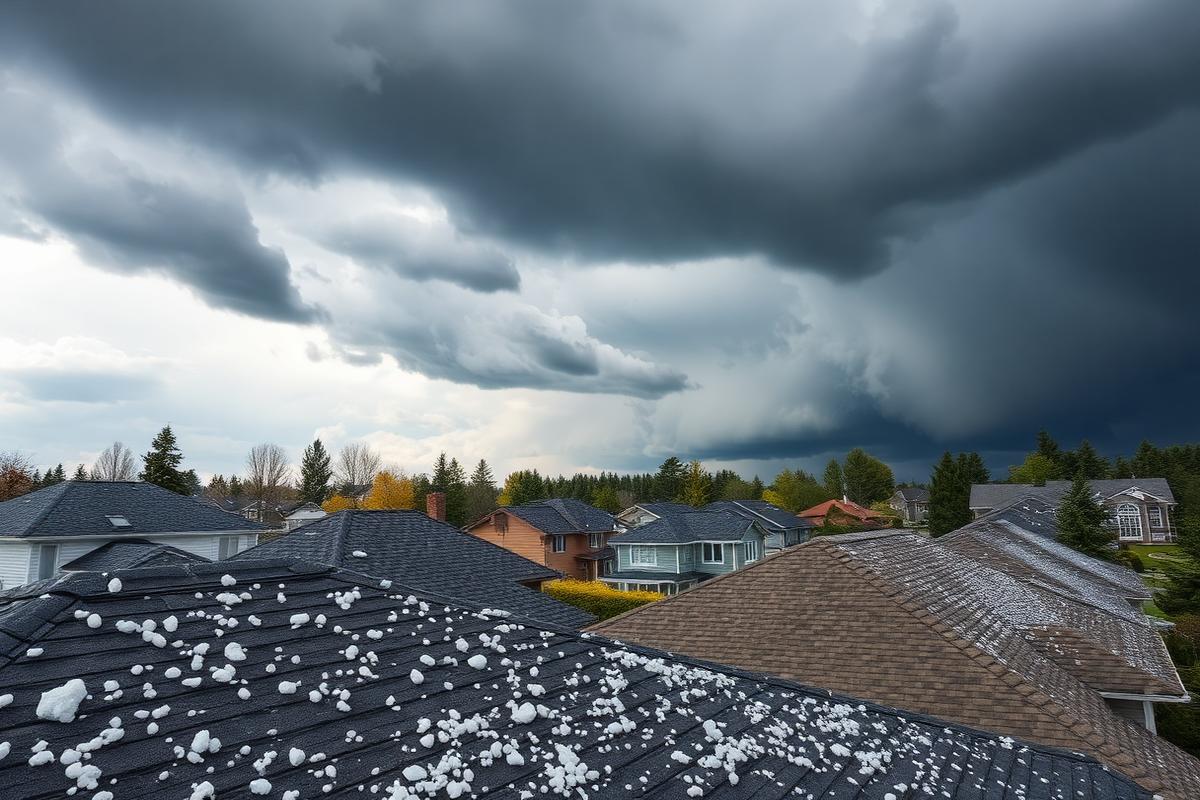
Hail does not punch holes. It knocks granules off the shingle surface and bruises the asphalt mat underneath, destroying the UV protection that keeps the shingle from drying out. The roof keeps working — until it does not.
- Round black bruises where granules are gone and the mat shows through.
- Soft spots that give slightly under a thumb, like a bruised apple.
- Granule accumulation in gutters and at the bottom of downspouts.
- Dents in soft metals: vents, aluminum fascia, eavestrough, garage door, the top of the AC condenser.
Check the AC unit from the ground
The condenser fins and downspout elbows are the easiest hail indicators on the property. If they are dimpled, the roof took the same impacts and it is worth an inspection.
The claim sequence, in order
- 01
Get an independent inspection
A contractor inspection with a photo report gives you a documented scope before an adjuster ever sets a date.
- 02
Open the claim
Call your insurer with the storm date and the inspection findings. You get a claim number and an assigned adjuster.
- 03
Adjuster inspection
The adjuster inspects, usually with a test square, and writes a scope of loss. Have your contractor on the roof at the same time.
- 04
Scope reconciliation
Compare the adjuster's scope to the real scope. Missing slopes, vents, flashing and code upgrades get supplemented here.
- 05
First cheque, work, final cheque
Most policies release actual cash value first, then the recoverable depreciation after the work is completed and invoiced.
ACV vs RCV: why the first cheque looks small
Replacement cost value is what it costs to rebuild the roof today. Actual cash value is that number minus depreciation for the age of the roof. Most Ontario policies pay ACV up front, hold back the depreciation, and release it once you prove the work was done.
| Line | Meaning | When you see it |
|---|---|---|
| RCV | Full cost to replace the roof at today's prices | On the scope of loss |
| Depreciation | Deduction for the age and wear of the old roof | Held back initially |
| ACV | RCV minus depreciation, minus your deductible | First cheque |
| Recoverable depreciation | Released once the work is completed and invoiced | Final cheque |
That is why a homeowner sometimes concludes the claim was not worth it after seeing the first payment. It is a partial payment, not the settlement.
The underscoped claim problem
Adjusters are inspecting many roofs in a week after a regional storm. The most common omissions we supplement are entire slopes marked undamaged, ridge cap, drip edge, pipe boots and vents, eavestrough and downspouts, and code-required ice-and-water shield that did not exist when the original roof went on.
Being on the roof at the same time as the adjuster is worth more than any letter you can write afterward.
Avoid the storm-chaser trap
After a major hail event in Durham Region, out-of-town crews canvass door to door with an authorization form and a promise to waive your deductible. Waiving a deductible is insurance fraud in Ontario, and a company with no local address cannot honour a workmanship warranty three winters from now.
- Never sign anything at your door, especially a contingency agreement.
- Ask for a current WSIB clearance certificate and liability insurance.
- Verify a local address and a written workmanship warranty.
- Confirm who handles the claim paperwork and whether it costs you anything.
What to do next
- Book a free hail inspection with a photo report before you call the insurer.
- Note the exact storm date — claims are decided against a specific weather event.
- Have your contractor present at the adjuster inspection.
- Keep the final invoice: it is what releases your recoverable depreciation.