
Winter
Ice dams and Ontario winters: prevention, ventilation and insulation
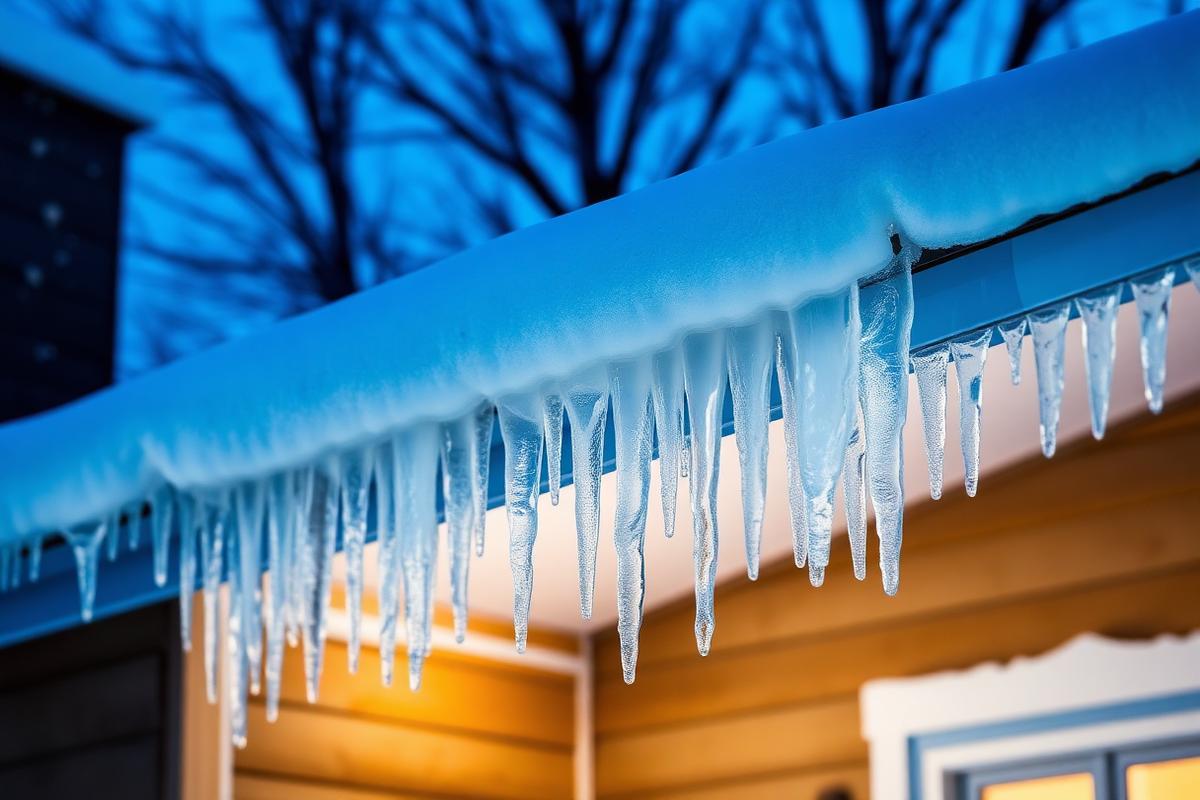
Icicles across the eaves look like winter charm. They are actually a live readout of how much heat your house is losing into the attic — and a warning that water is being pushed backwards under your shingles.
How an ice dam forms
- 01
Heat escapes
Warm indoor air leaks into the attic through pot lights, plumbing stacks, hatch openings and top plates.
- 02
The upper roof warms
That heat warms the deck above the heated part of the house, while the eave stays at outdoor temperature.
- 03
Snow melts and runs down
Meltwater flows under the snowpack toward the cold overhang.
- 04
It refreezes at the eave
A ridge of ice builds, water ponds behind it, and it works its way up under the shingles into the assembly.
The key point: the shingles are not the failure. Shingles shed water flowing downhill — they are not designed to hold standing water backing uphill.
Why roof rakes and heat cables are bandages
A roof rake removes the fuel for the next dam and is worth doing on the lower few feet after a heavy snowfall. Heat cables melt a channel through the ice so water has an escape route. Neither addresses why the roof is warm, and both add their own problems — rakes strip granules if used aggressively, and cables age, fail and get expensive to run.
Never chip ice off a roof
Hammers, axes and ice picks destroy shingles and flashing that are brittle in the cold. Steam removal by a professional is the only safe way to take a dam off mid-winter.
The permanent fix, in priority order
- 01
Air sealing first
Seal every attic penetration — pot lights, bath fans, plumbing stacks, wire runs and the attic hatch. This is the cheapest and highest-impact step and most homes have never had it done.
- 02
Insulation second
Bring attic insulation up to modern levels and keep it out of the soffit with baffles so intake air can still move.
- 03
Ventilation third
Balance intake at the soffits with exhaust at the ridge so the deck stays close to outdoor temperature all winter.
- 04
Membrane fourth
At the next re-roof, run ice-and-water shield well past the code minimum at the eaves and through every valley.
Ice dams are an attic problem that shows up on the roof. Fix the attic and the icicles stop on their own.
Check where your fans actually vent
Bathroom and kitchen fans that terminate inside the attic are one of the most common problems we find in Durham Region homes. They dump warm, humid air directly against the cold sheathing, which drives both ice dams and attic frost that rains down on the insulation during a thaw.
- Every fan should terminate through the roof or wall with an insulated duct and a damper.
- Dryer venting should never terminate in the attic under any circumstance.
- Check for a white frost layer on the underside of the sheathing in February — that is condensation, not a leak.
What to do if a dam already leaked
Contain the water inside, photograph everything, and call for steam removal rather than mechanical chipping. Sudden ice-dam water damage is often covered by Ontario homeowner policies; repeated damage on a roof with known ventilation problems frequently is not, which is another reason to fix the cause once.
What to do next
- Book an attic and ventilation assessment in early fall, before freeze-up.
- Air seal and insulate before spending anything on heat cables.
- Confirm all bath and dryer fans terminate outdoors.
- Specify extended ice-and-water shield on your next re-roof.