
Commercial
Choosing a commercial flat roof system: TPO vs EPDM vs modified bitumen
Flat roofs almost never fail in the middle of the membrane. They fail at seams, drains, curbs and penetrations — which is why the right system for your building depends far more on how the roof gets used than on which membrane a salesperson prefers.
The three systems at a glance
| System | Lifespan | Strengths | Watch-outs |
|---|---|---|---|
| TPO | 20–30 years | Reflective white surface, heat-welded seams, strong price-to-performance | Quality varies by manufacturer; welds must be probe-tested |
| EPDM | 20–30 years | Extremely durable rubber, simplest repairs, handles movement well | Black surface absorbs heat; adhered seams need maintenance |
| Mod-bit | 20–25 years | Multi-ply redundancy, best with heavy foot traffic and many penetrations | Heavier, more labour, torch-applied work needs strict fire protocol |
Start with rooftop traffic, not membrane type
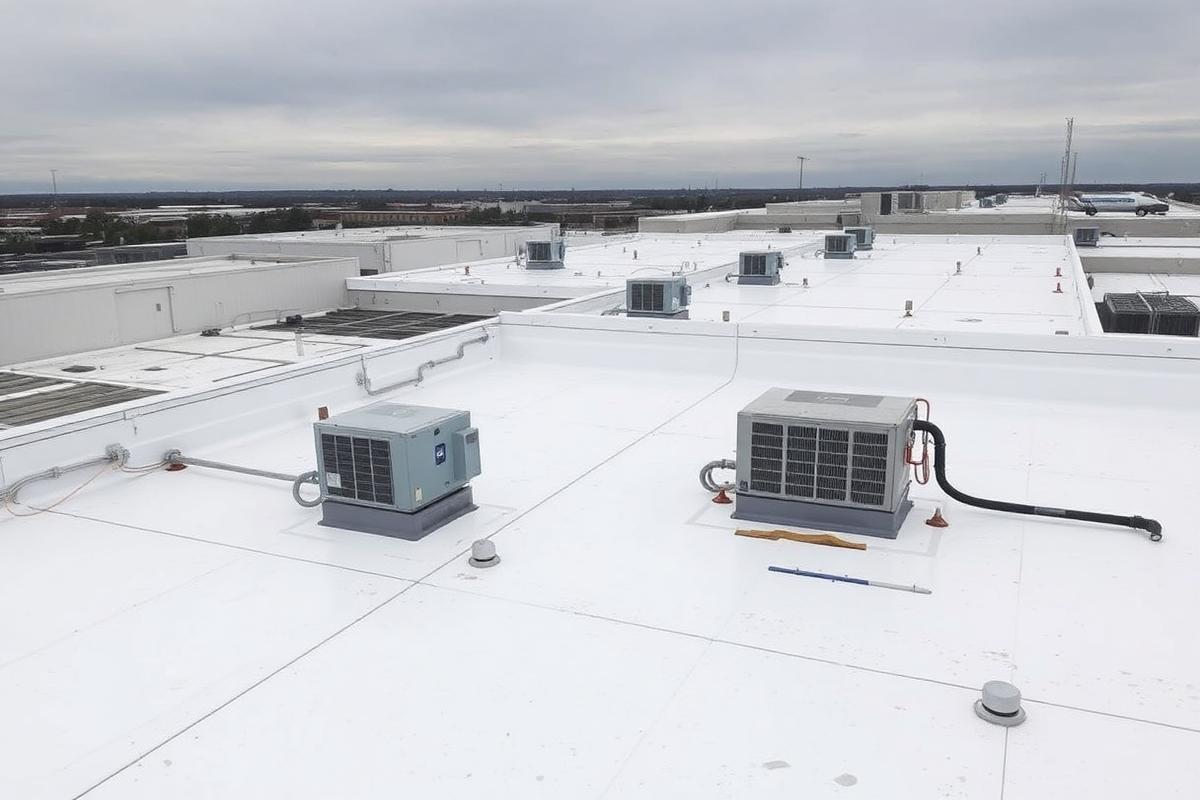
Ask one question first: who walks on this roof and how often? A retail plaza with six HVAC units serviced quarterly is a completely different roof from a warehouse nobody visits except for annual inspection.
- Heavy service traffic: multi-ply modified bitumen, or a single-ply with proper walkway pads routed between every unit and the access hatch.
- Restaurants and grease exhaust: plan for grease-resistant detailing and containment around kitchen exhaust — grease destroys most membranes.
- Low traffic warehouse: TPO gives the best reflectivity and cost per square foot.
- Complex rooftops with many curbs and penetrations: the detailing quality matters more than the membrane brand.
The insulation and drainage layer decides performance
Under the membrane sits the part that actually controls energy cost and ponding: the insulation and tapered assembly. Ontario buildings frequently have original roofs with wet, compressed insulation that has lost most of its R-value while the membrane above still looks serviceable.
- Ponding water that remains 48 hours after rain indicates inadequate slope or crushed insulation.
- Tapered insulation packages redirect water to drains without structural work.
- Wet insulation must be removed, not covered — a new membrane over saturated board fails early and voids warranties.
- Infrared or core-sample surveys confirm what is wet before you budget the job.
Total cost of ownership, not price per square foot
Divide the installed cost by expected service life and add the annual maintenance required to hold the warranty. A slightly more expensive system with easy repairs and a serviceable detail package usually wins over a twenty-year horizon, especially when a failure means tenant disruption.
The most expensive flat roof is the one that fails over a leased suite on a Friday night.
Build the maintenance program into the decision
Nearly every manufacturer warranty requires documented inspection and maintenance. Semi-annual service — clearing drains, probing seams, resealing penetrations, and photographing conditions — keeps the warranty valid and catches the small failures that become emergency claims.
- 01
Spring inspection
Winter damage, drain clearing, seam probe, flashing check.
- 02
Fall inspection
Debris removal, curb and penetration reseal, pre-winter condition report.
- 03
Written condition report
Photo-documented findings with repair priorities and cost estimates.
- 04
Multi-year capital plan
A replacement year and budget figure for each building so ownership can plan instead of react.
What to do next
- Inventory rooftop traffic and penetrations before comparing membranes.
- Get a moisture survey before quoting any re-cover or replacement.
- Ask each bidder for their detailing plan at curbs, drains and edges.
- Put a semi-annual maintenance program in place the day the roof is finished.